

Stamped concrete that looks like stone, brick or slate - for a fraction of the cost.
South Florida's most-requested decorative finish. The character of natural materials with the strength and longevity of poured concrete.
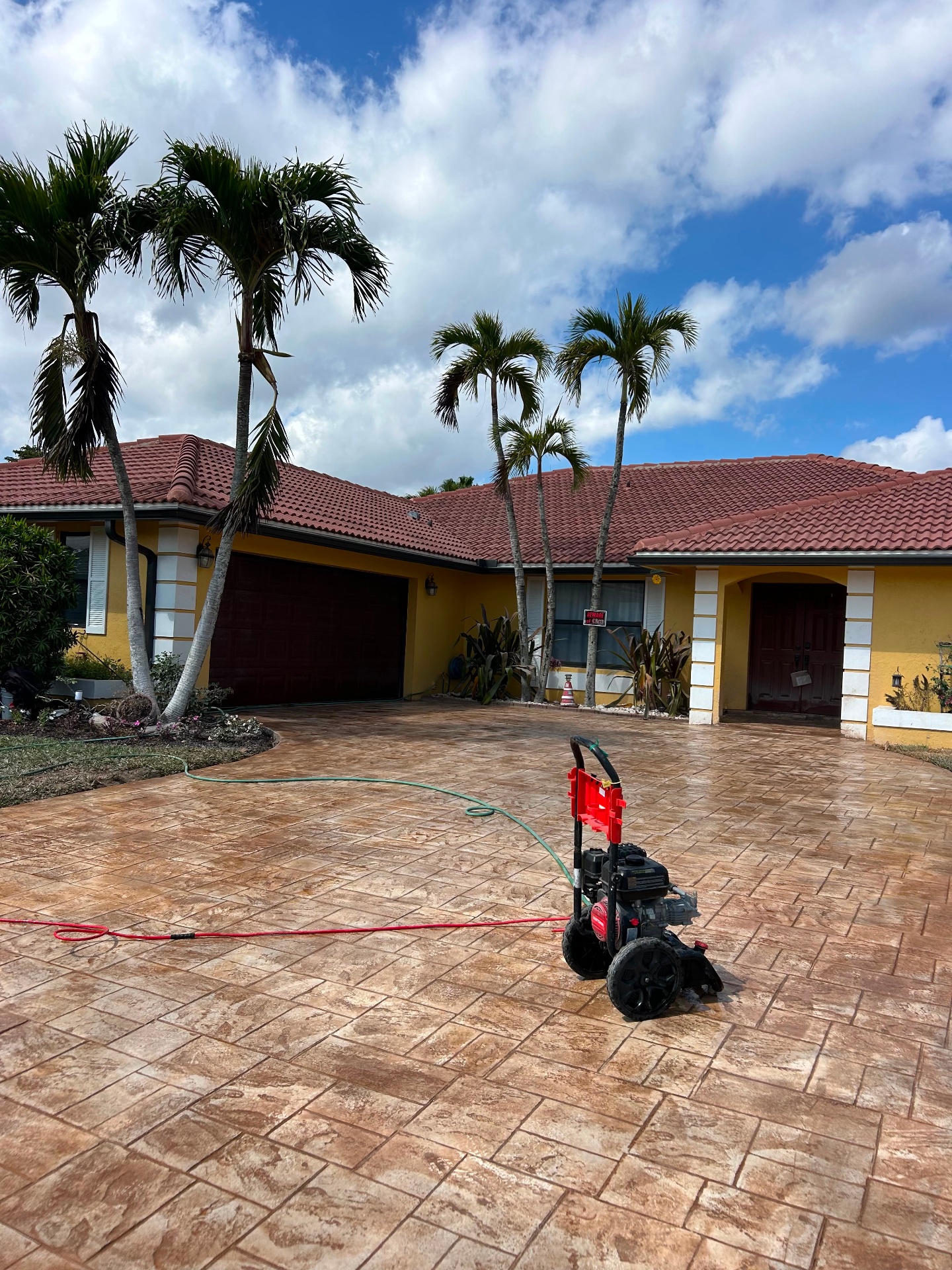
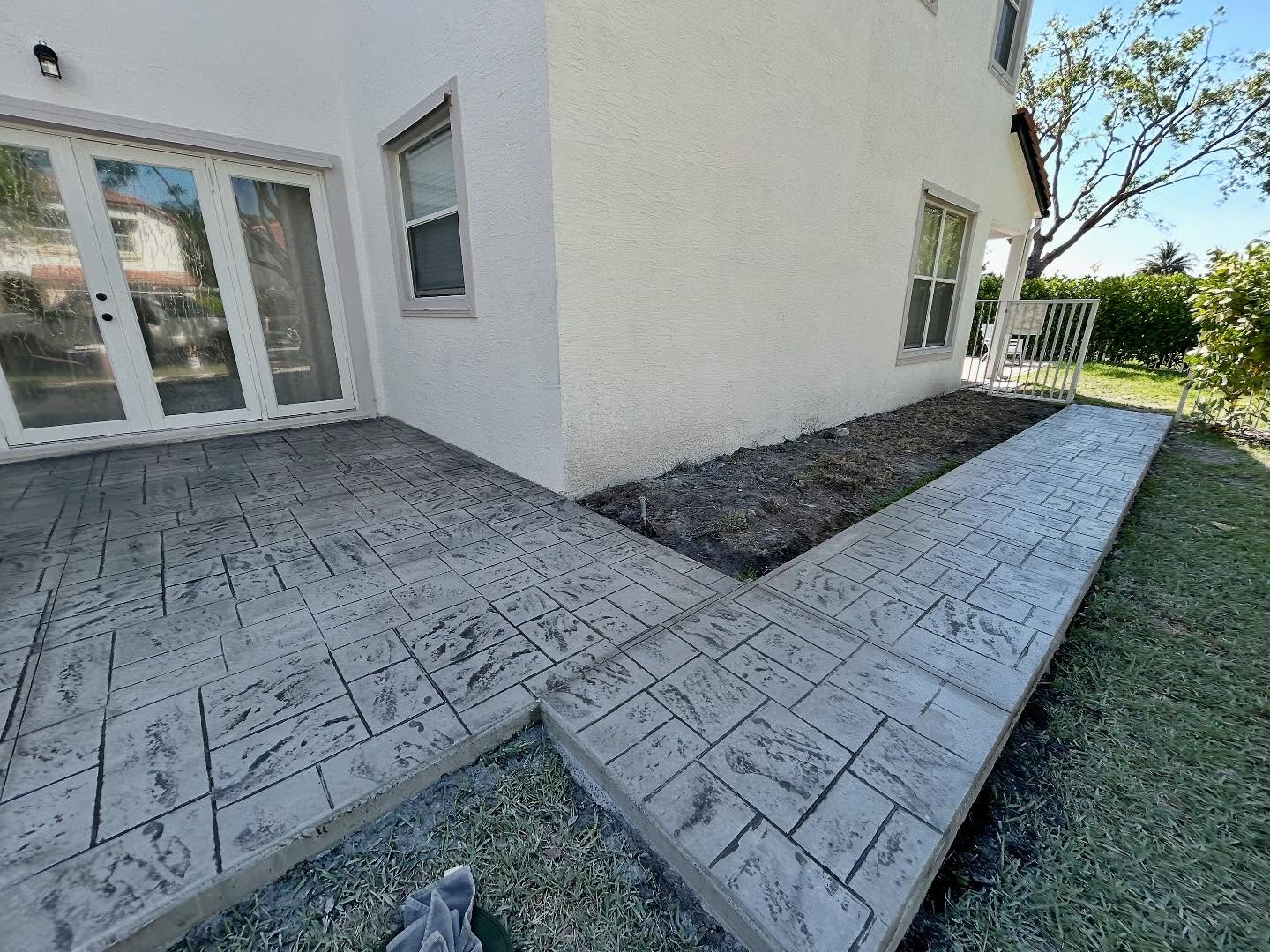
Stamped concrete is the smartest way to get a high-end stone, brick or slate look without paying for natural materials or dealing with shifting pavers. We pour a single monolithic slab, color it through and through, and press large rubber stamping mats into the wet surface to imprint authentic texture. The result is a continuous, weed-proof, low-maintenance surface that holds its pattern and color for decades under Florida sun.
- Brick, slate, cobble & ashlar pattern library
- Integral and broadcast color options
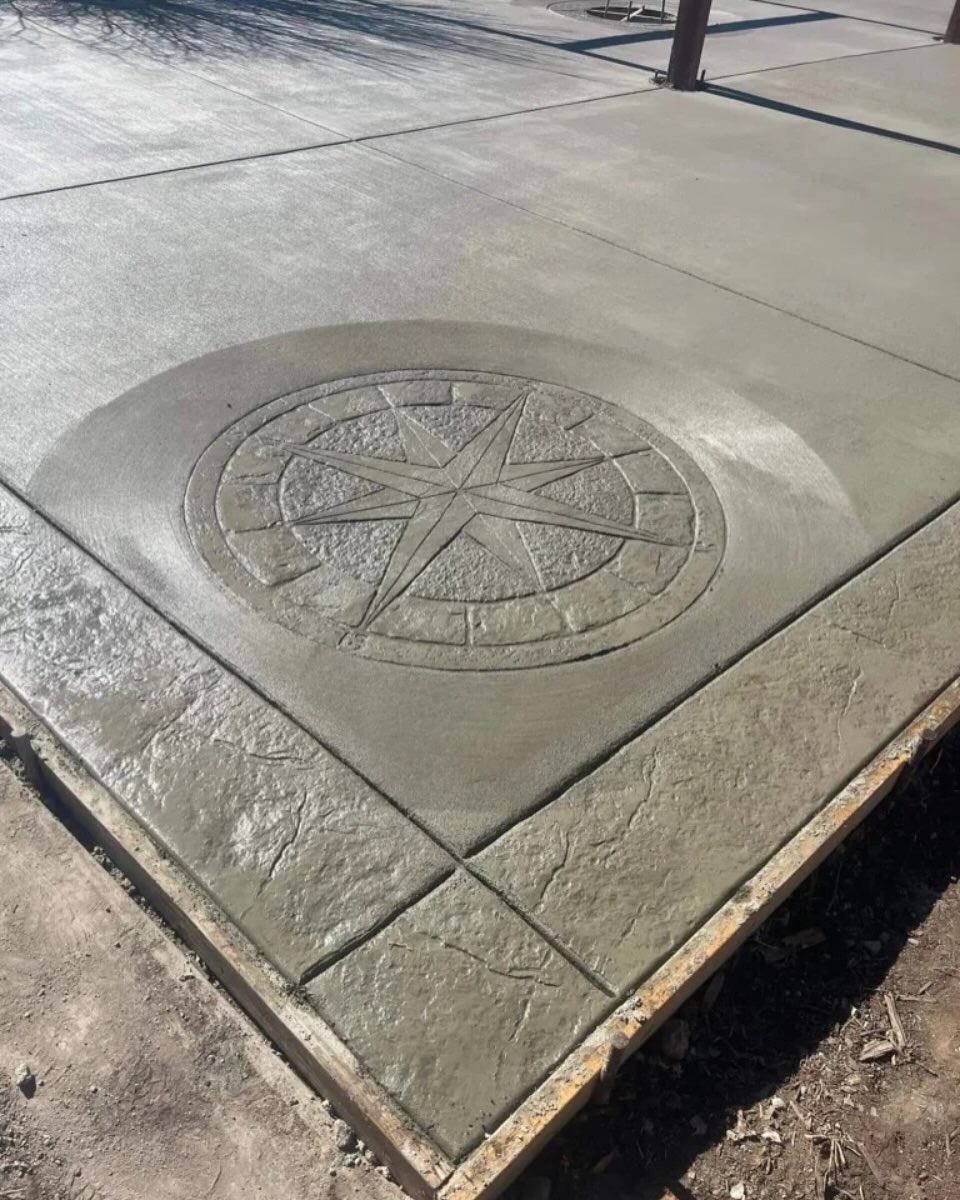
- Custom borders, bands & medallions
- Non-slip additives for pool decks
- UV-resistant sealing & maintenance plans
Why South Florida homeowners choose stamped concrete
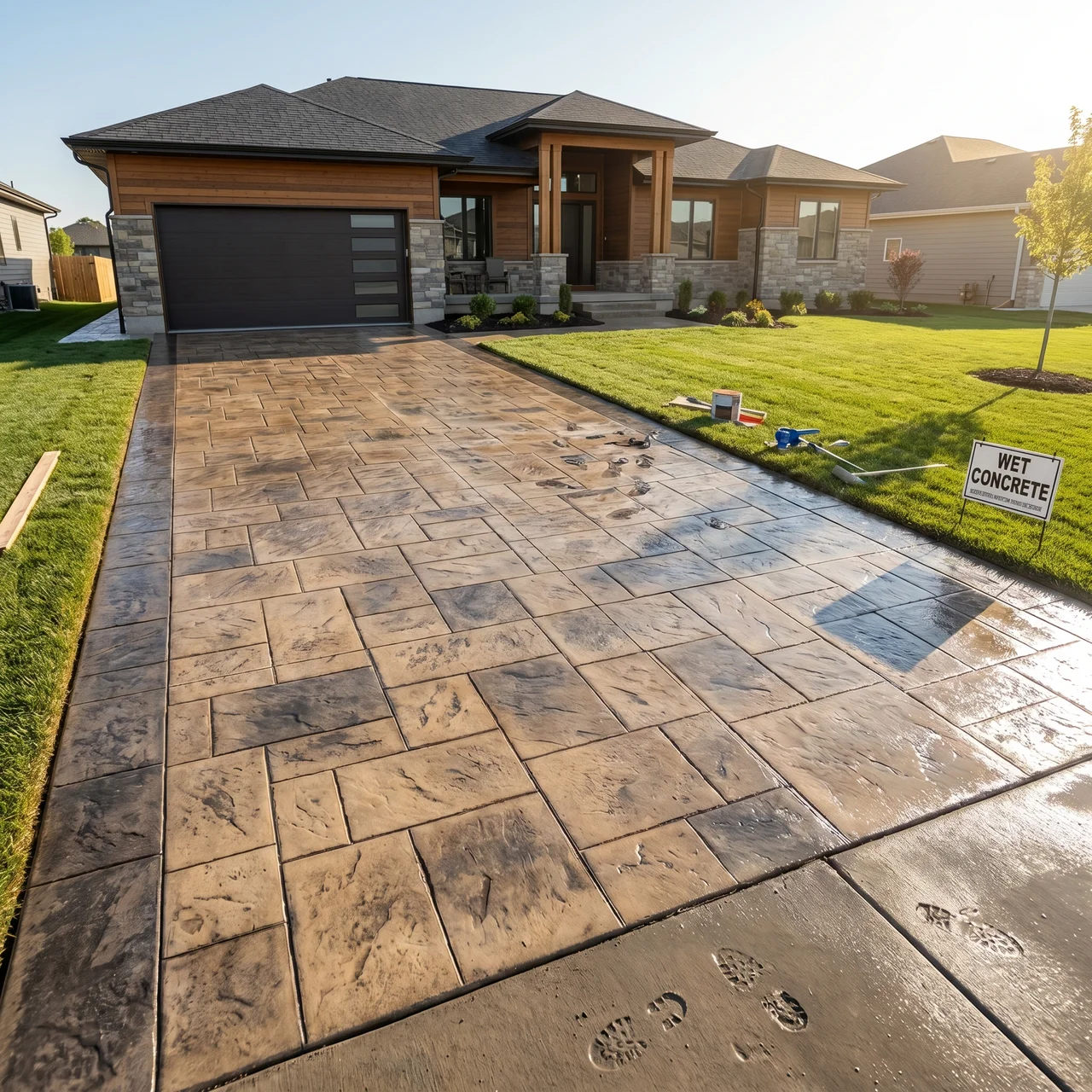
Pavers shift. Natural stone is expensive and porous. Plain concrete looks industrial. Stamped concrete solves all three problems in one pour: you get the visual texture of European cobble, Tennessee slate or Old Chicago brick on a single reinforced slab that won't sink, sprout weeds, or stain the way real stone does. Florida's sun and salt air are brutal on outdoor finishes — our UV-stable sealers and integral color keep stamped surfaces looking the day-one color for years instead of fading to gray.
Patterns, colors and finishes we install
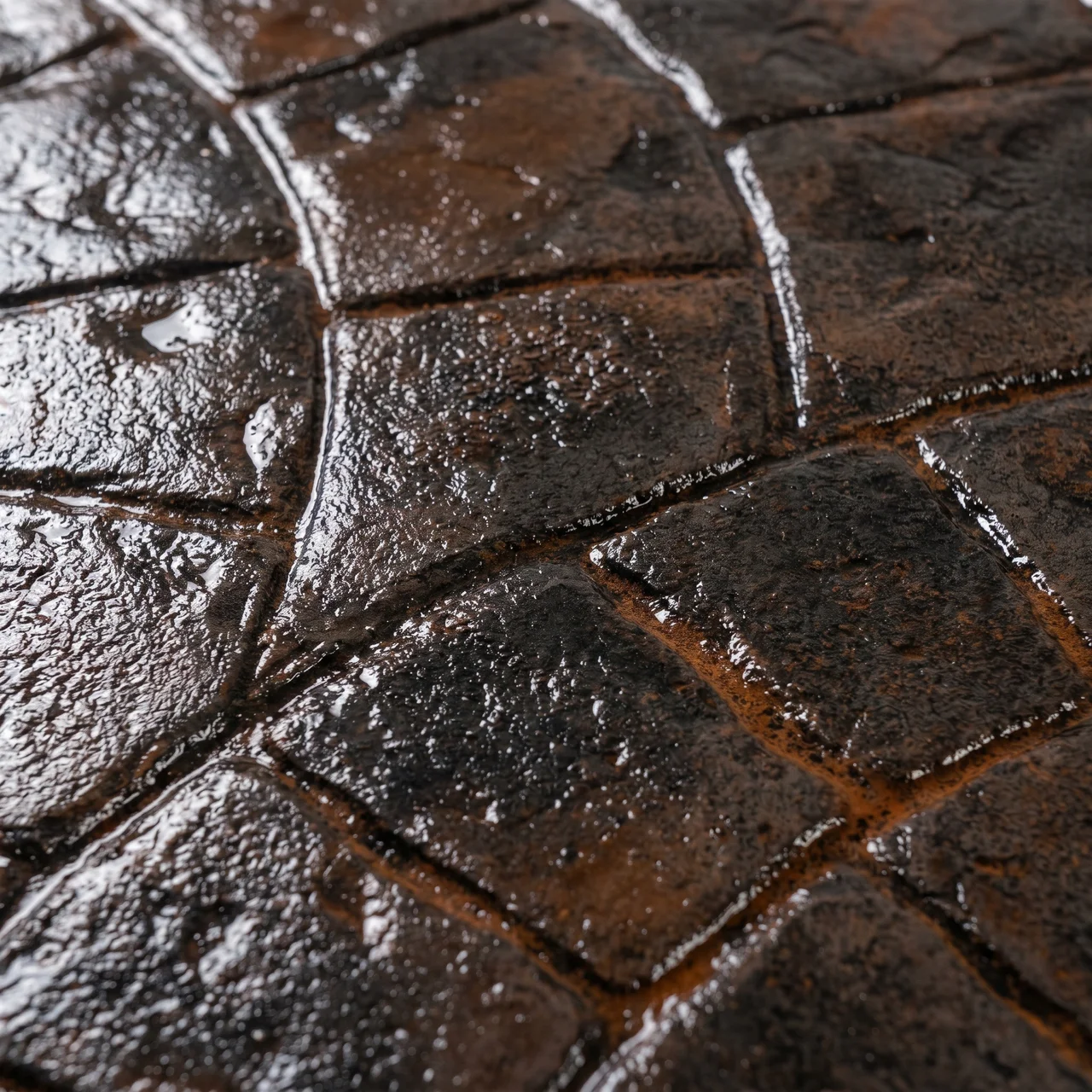
We carry a deep library of large-format stamping mats so we can match almost any architectural style. Popular pattern choices include Ashlar Slate, Roman Slate, London Cobble, Old Chicago Brick, Yorkstone, and Random Stone. For color we offer integral color (mixed into the concrete before it leaves the truck), color hardener broadcast onto the slab for richer surface tone, and a contrasting antiquing release that settles into the grout joints for true depth. Borders and medallions — compass roses, soldier-course banding, custom logos — are scored and stamped to your design.
Built for pool decks, patios and driveways
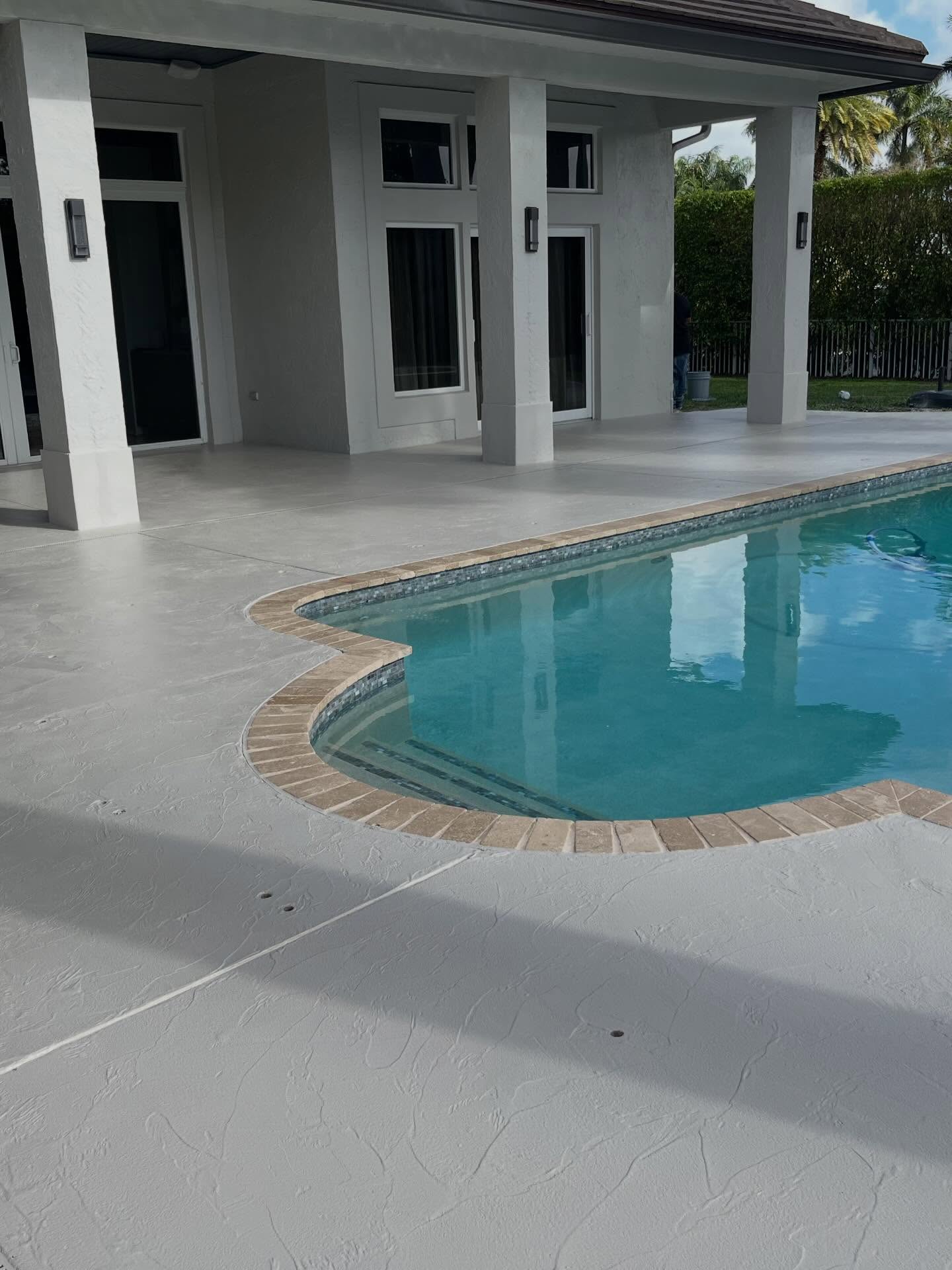
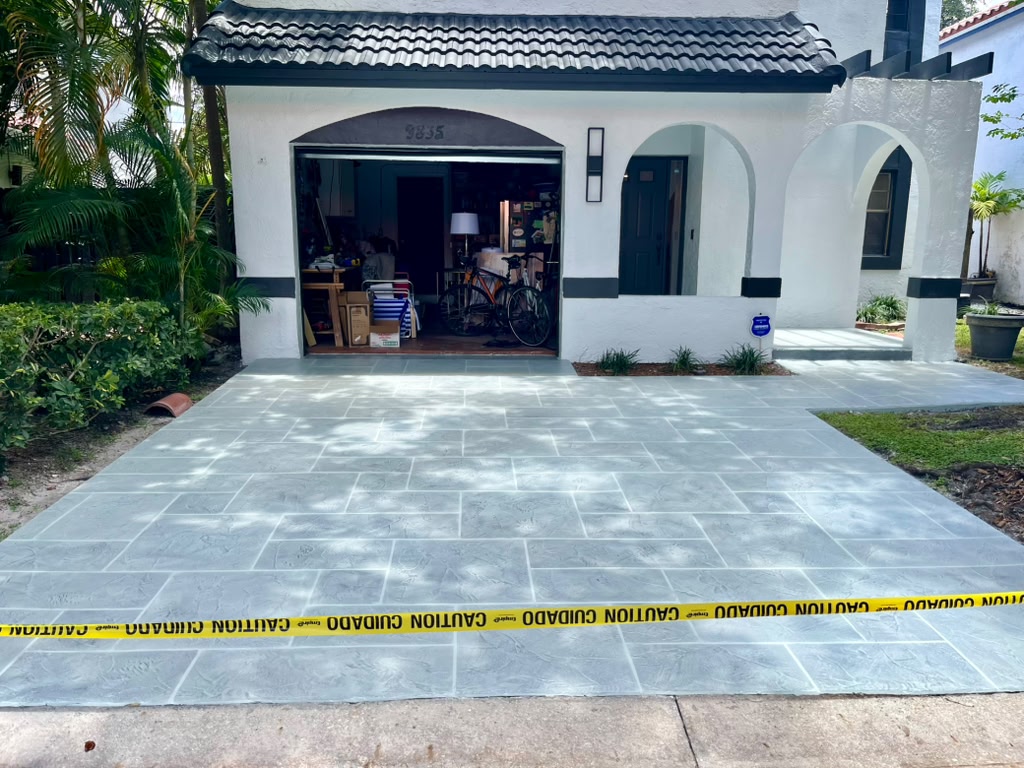
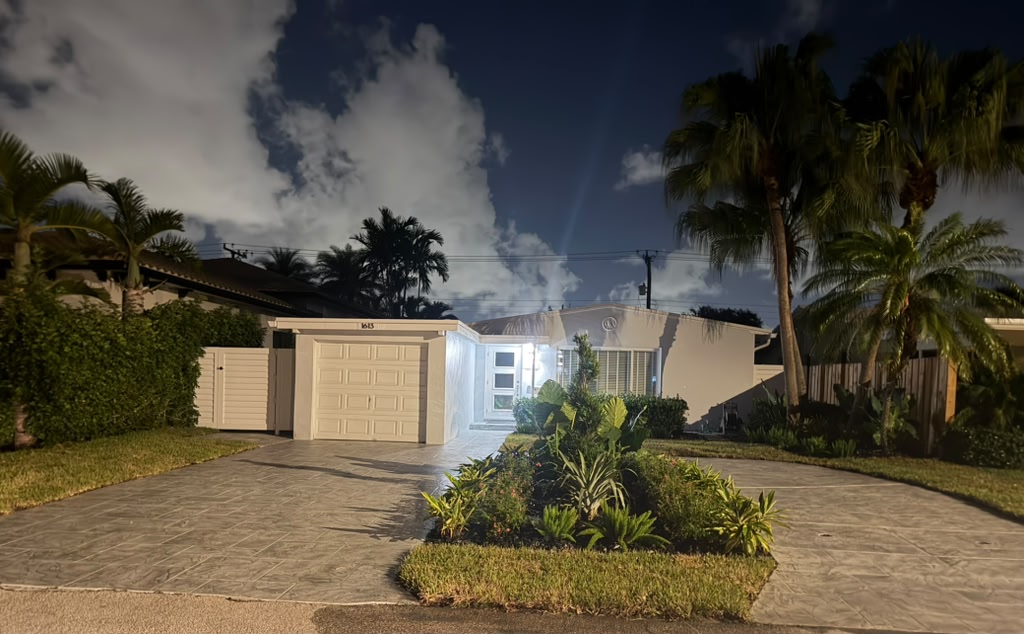
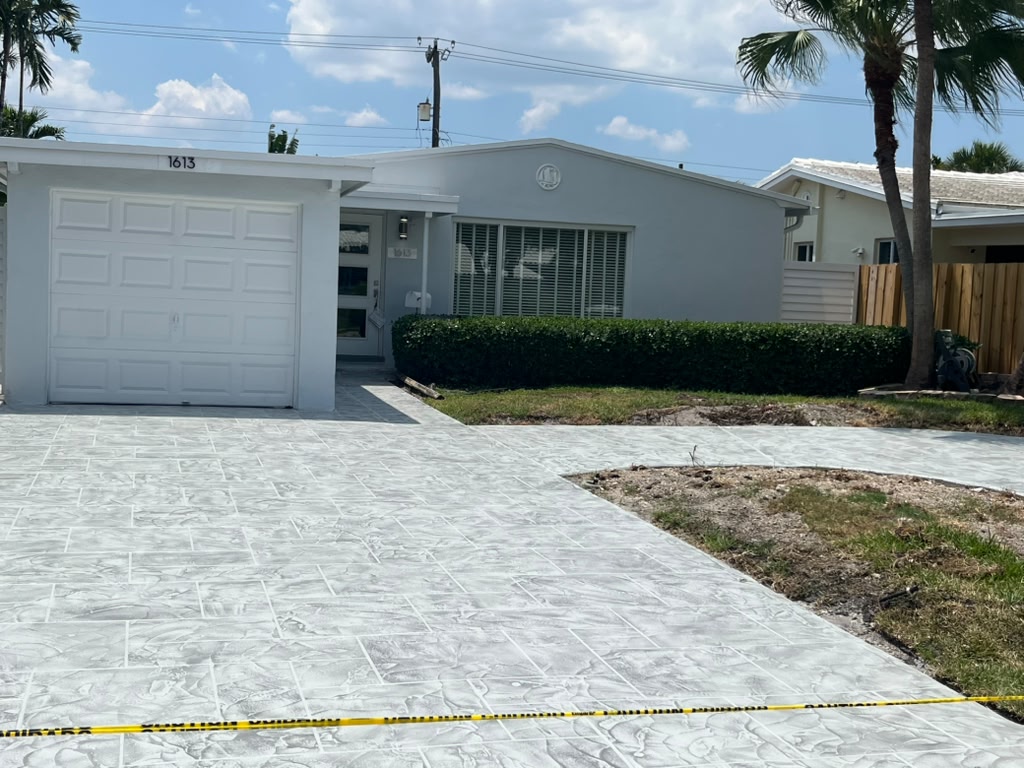
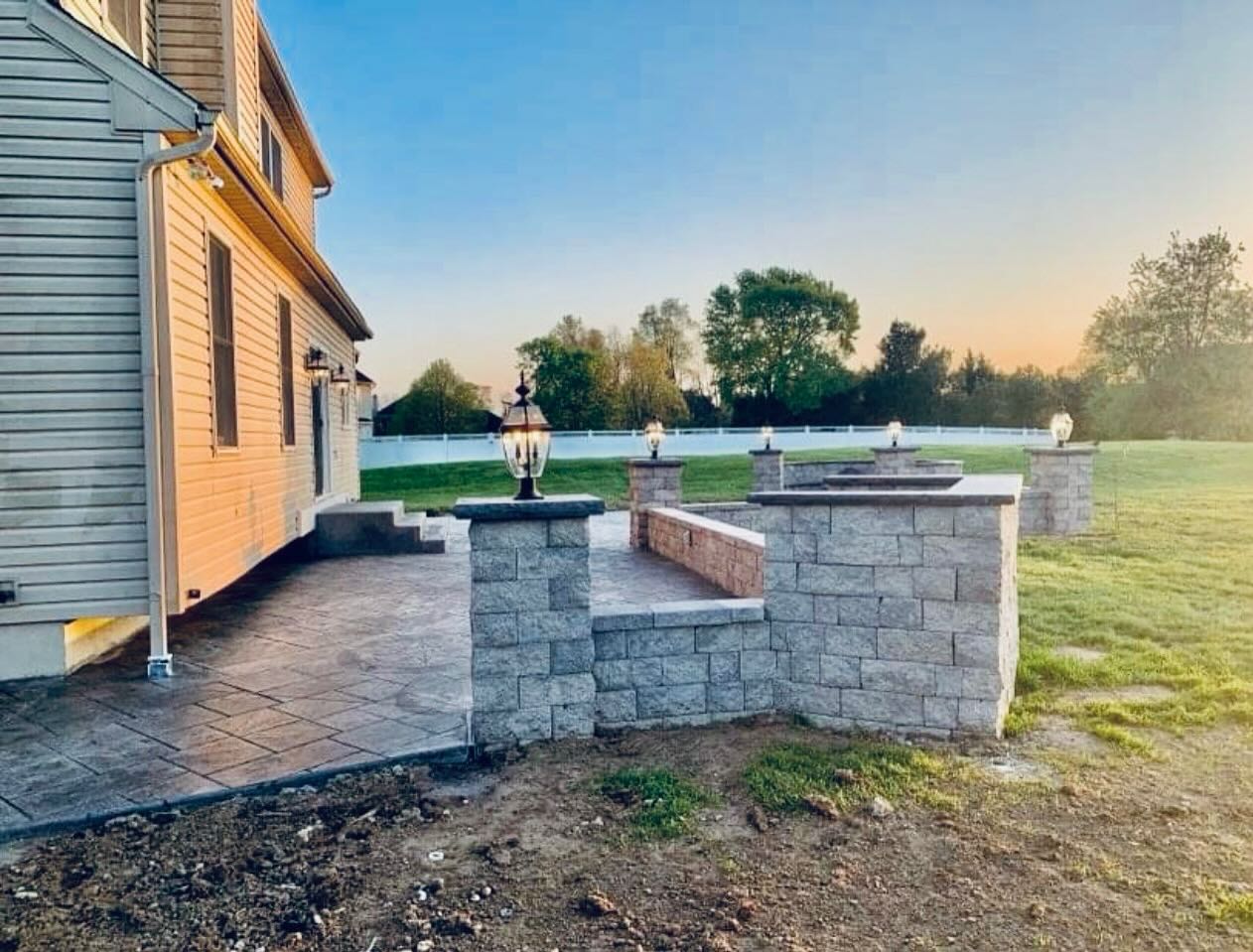
Stamped concrete works as well around water as it does under cars. For pool decks we add a non-slip silica additive into the sealer so the surface stays grippy when wet, and we choose lighter colors that reflect heat instead of soaking it up. For driveways we thicken the slab, add a rebar grid, and place expansion joints precisely so the stamp pattern hides the joints. For patios we can tie the new pour into existing flatwork or wrap it around fire pits, seat walls and outdoor kitchens.
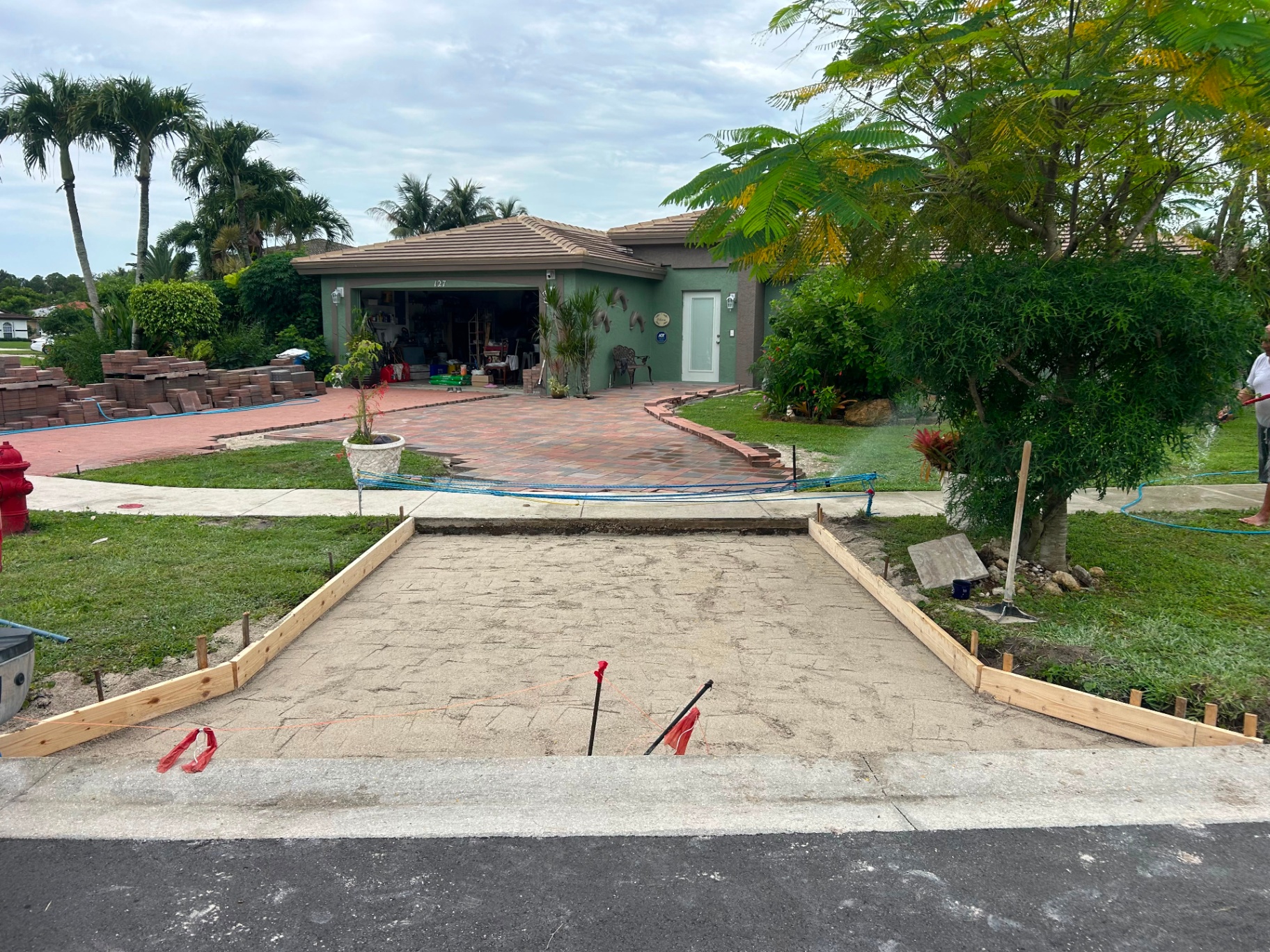
From our portfolio.
How we build it.
Design & sample panel
We mock up your pattern, primary color, and release tone on a sample panel before any concrete is ordered, so you approve the exact look in your own daylight.
Pour, color & stamp
Concrete is placed and screeded, color hardener broadcast and floated in, then stamps pressed in the precise window where the slab is firm enough to hold detail but soft enough for deep imprint.
Cut, cure & seal
Control joints are saw-cut into the pattern lines so they disappear. After full cure we wash, neutralize and apply a UV-resistant sealer that locks in color and shrugs off pool chemicals.
Questions, answered.
How long does stamped concrete last?+
A properly installed stamped slab will easily last 25–30 years structurally. The decorative finish stays sharp as long as you reseal every 2–3 years, which we can quote as a simple maintenance plan.
Does stamped concrete crack?+
All concrete moves. The honest answer is that hairline cracks can develop, but we control where they go by cutting joints into the pattern lines so any movement hides inside the stamp grout. A properly engineered slab with the right rebar and joint spacing almost never shows a visible crack.
Is stamped concrete slippery around a pool?+
Not when finished correctly. We add a fine silica grit to the sealer on pool decks and pick textured patterns like slate or seamless stone that stay grippy when wet.
How much does stamped concrete cost vs pavers?+
Stamped concrete typically runs 15–30% less than installed travertine or premium pavers of comparable visual quality, and dramatically less in long-term maintenance because there is nothing to re-level or weed.
Can you stamp over my existing concrete?+
In many cases yes — using a stampable concrete overlay over a structurally sound existing slab. We inspect the substrate first; if the base is failing we recommend a fresh pour instead.