

Paver driveways, patios and pool decks that stay perfectly level.
The difference between a paver job that lasts 25 years and one that sinks in two seasons is everything you can't see — the base. We build ours right.
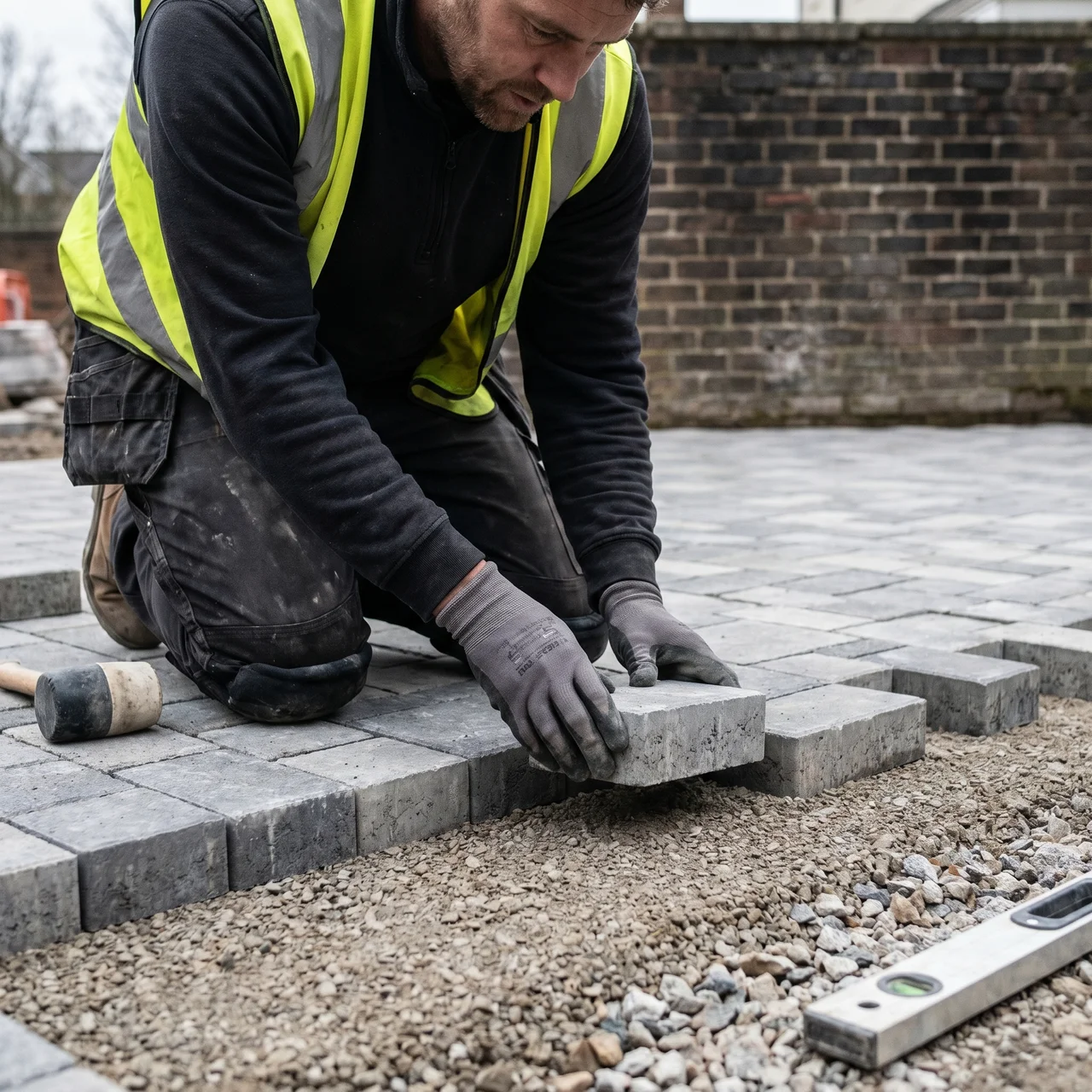
Most failed paver jobs in Florida fail for the same reason: the contractor skimped on excavation and base prep. We don't. Every Premier paver installation starts with proper excavation to grade, a compacted limerock base built up in layers, geotextile fabric where the soil calls for it, screeded bedding sand, and polymeric joint sand locked in with a plate compactor. The result is a surface that drains properly, locks together under load, and stays perfectly level for decades — not just until the warranty runs out.
- Driveway, patio, pool deck & walkway design
- Travertine, concrete, clay brick & natural stone
- Engineered base with proper drainage slope
- Polymeric joint sand to lock pavers in place
- Sealing, re-leveling & repair services
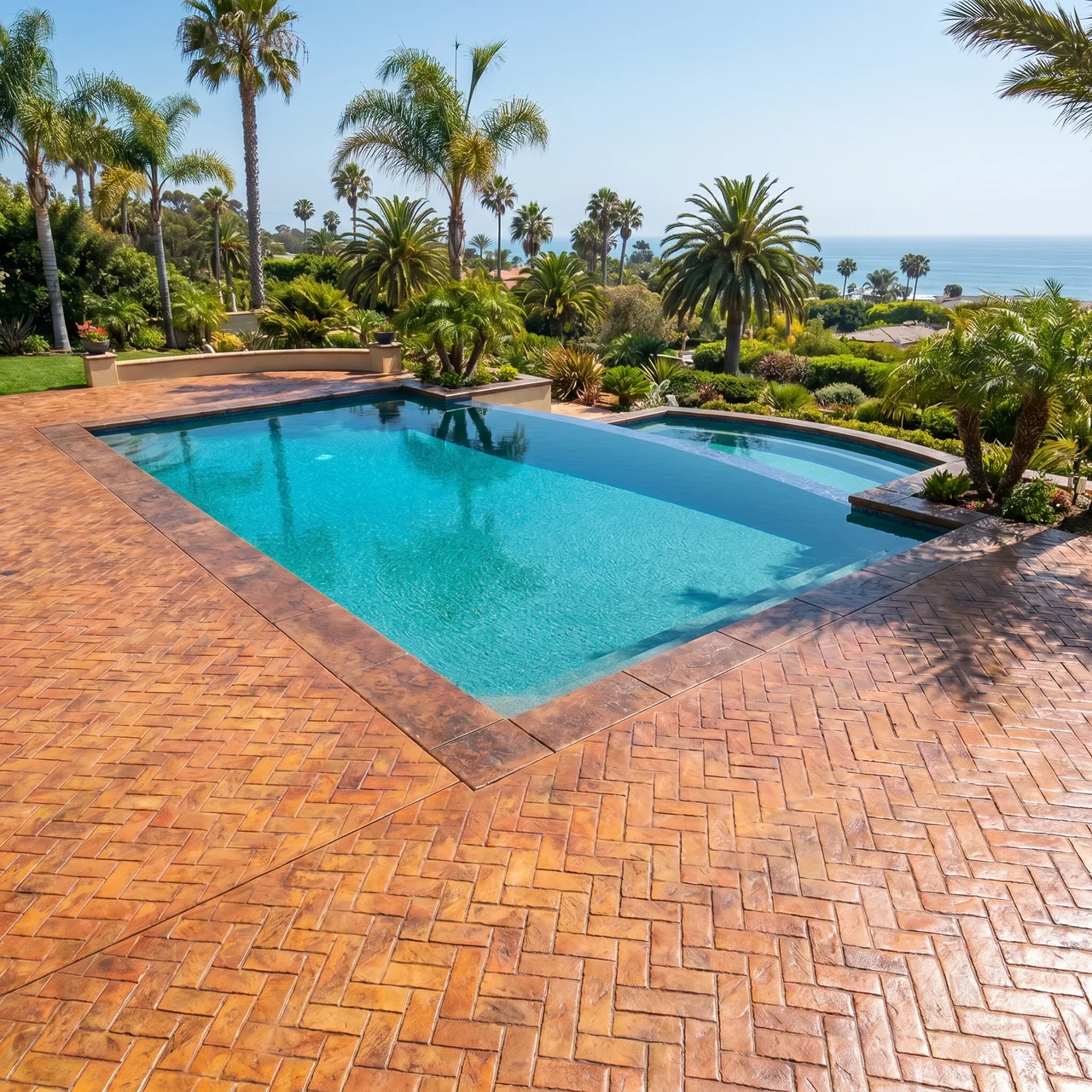
Travertine, concrete, clay brick — picking the right paver
Material choice drives both look and longevity. Travertine stays cool underfoot and is the go-to for pool decks. Concrete pavers are the workhorse for driveways — engineered strength, huge color and shape range, easy to replace individually if needed. Clay brick has unbeatable warm character and never fades. Natural stone (bluestone, flagstone) is the premium architectural choice. We walk you through pros, cons and price per square foot of each before you commit.
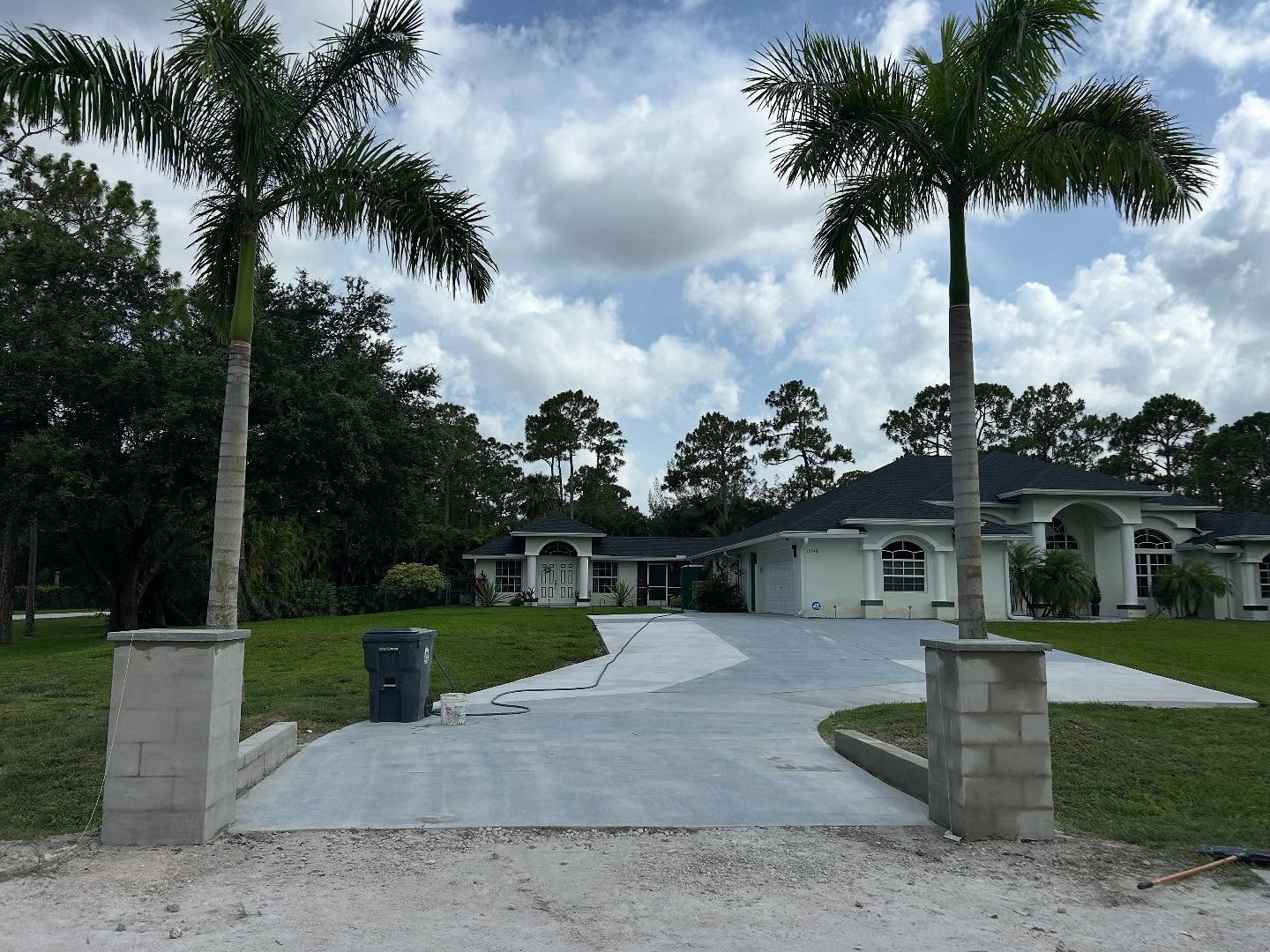
Engineered base — why ours doesn't sink
Florida soil is sandy and forgiving until it isn't. A driveway that holds a car needs at least 6 inches of compacted aggregate base on top of properly compacted subgrade, with edges restrained by either poured concrete or buried plastic restraints. We compact every 2 inches of fill, not just the final layer. On low spots we add geotextile fabric to keep the base from migrating into the subsoil. Drainage is sloped away from your foundation at minimum 1/8 inch per foot. This is the work that doesn't show but is the entire reason your investment lasts.
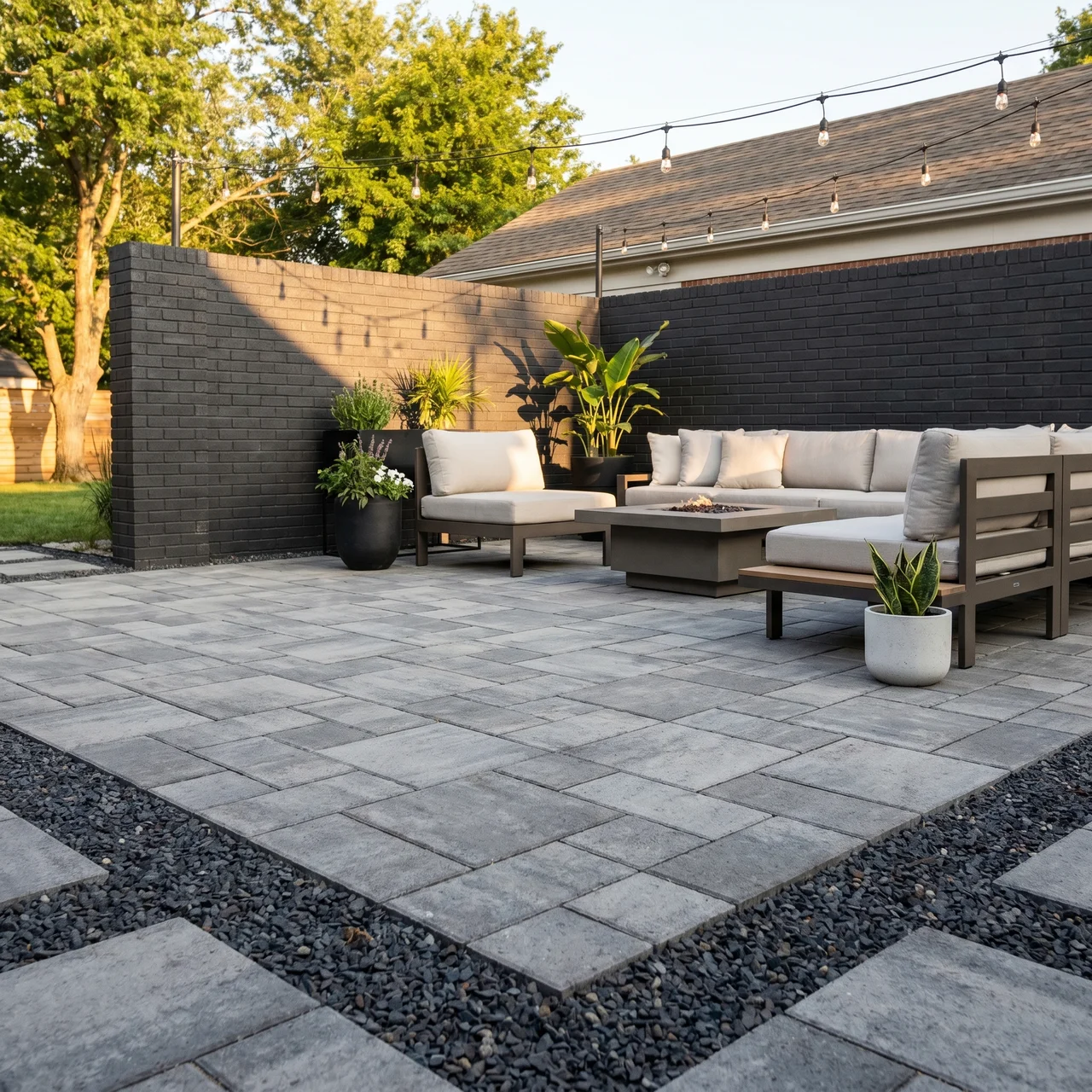
Polymeric sand, sealing and long-term care
Cheap installers use regular masonry sand in the joints. It washes out, weeds sprout, ants tunnel through it. We use polymeric sand — a fine sand mixed with binding polymers that hardens after wetting to form a flexible, weed-resistant joint that locks pavers together. After install we offer optional sealing in matte, satin or wet-look gloss to deepen color and shed stains. We also handle re-leveling and repair on installations you didn't do — older patios can almost always be saved.
From our portfolio.
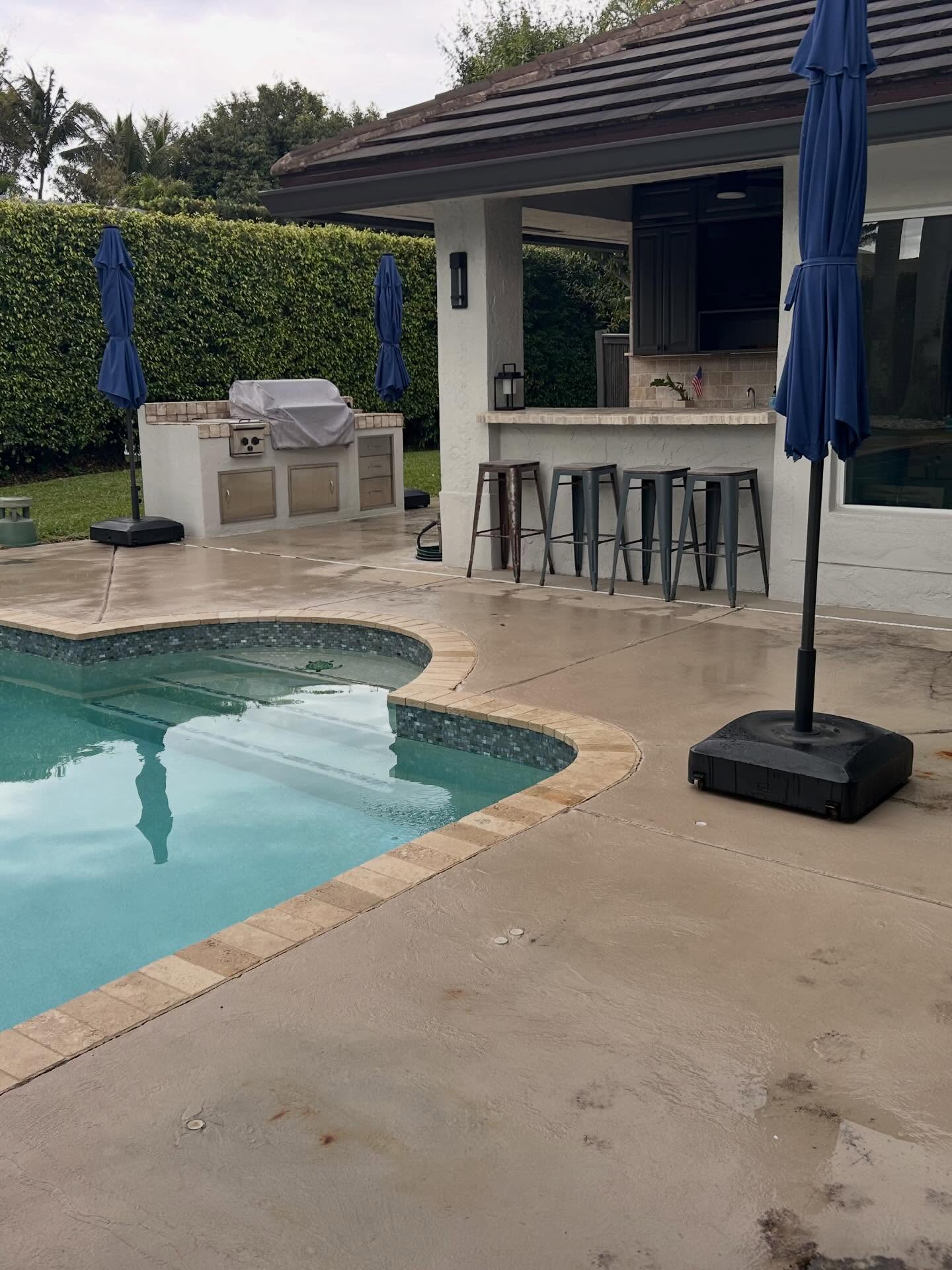
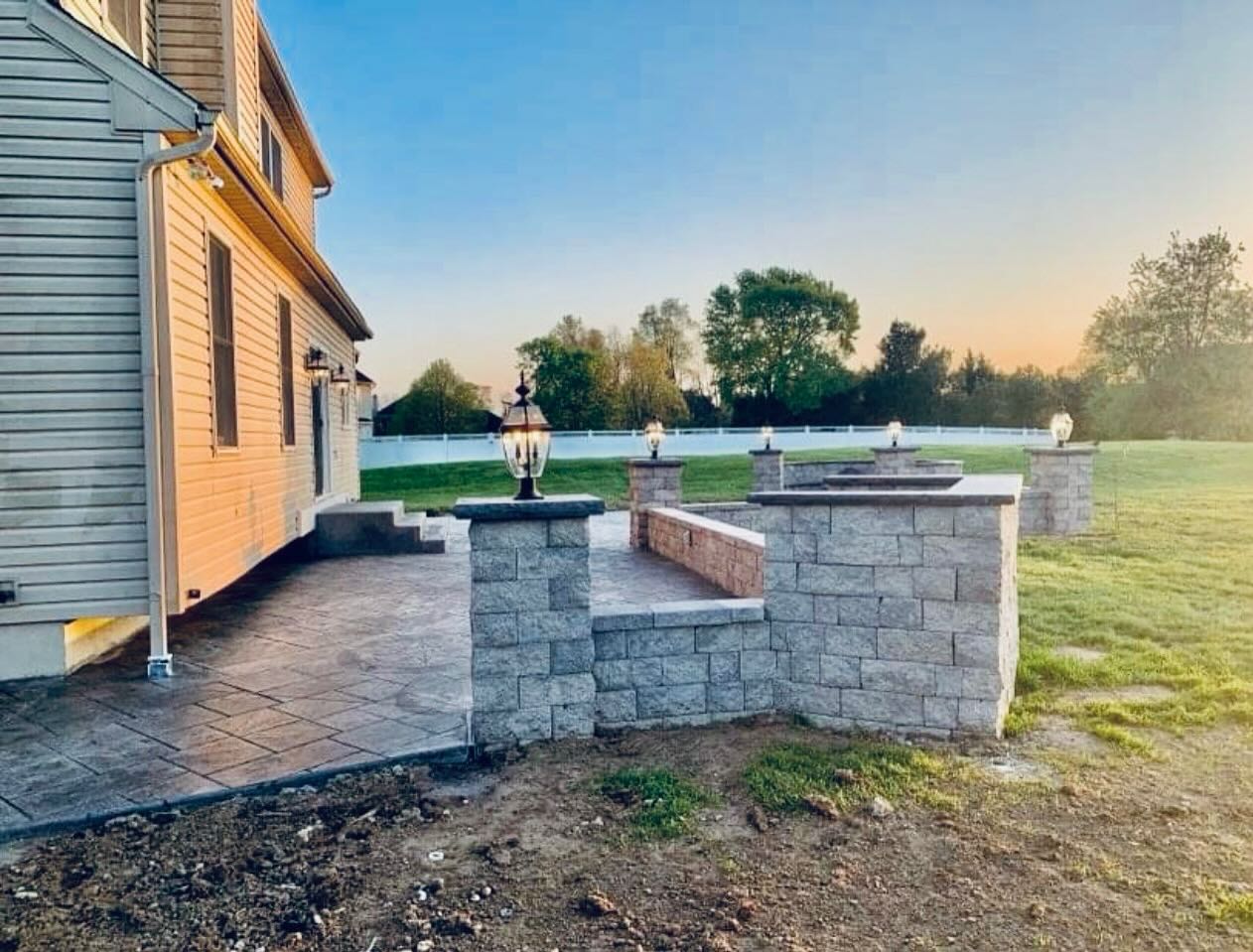
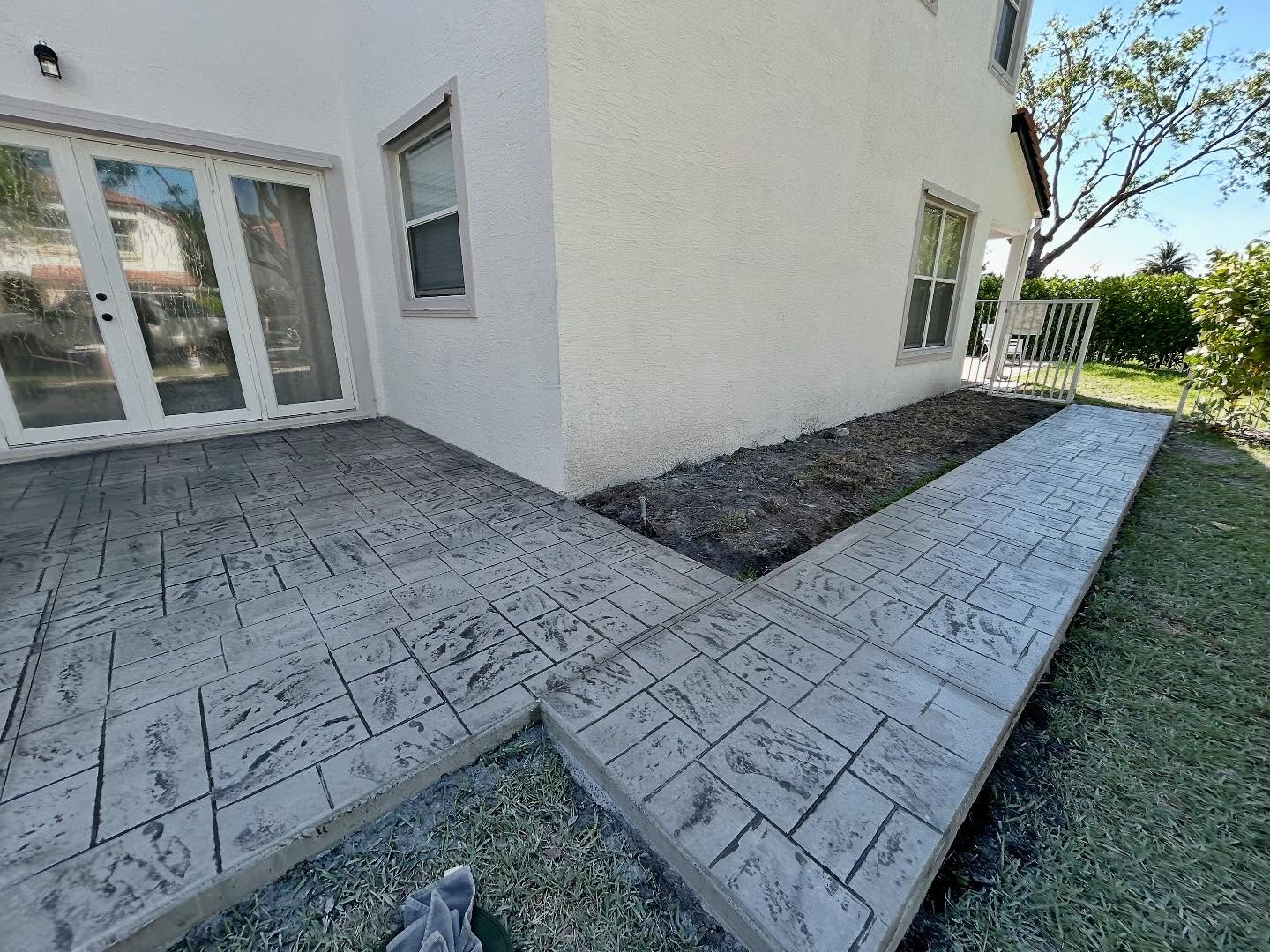
How we build it.
Excavate & grade
We dig to proper depth and grade for drainage away from structures.
Base & bedding
Compacted aggregate base topped with screeded bedding sand provides a stable foundation.
Lay & lock
Pavers are laid in pattern, cut to edges, vibrated in, and joints filled with polymeric sand.
Questions, answered.
How long does a paver driveway last in Florida?+
A properly installed paver driveway with engineered base will last 25–30+ years. Individual pavers can crack from extreme point loads but are individually replaceable — unlike a poured slab where any crack stays visible.
Do pavers get weeds?+
Not when polymeric sand is used and the surface is sealed. Standard sand washes out and lets weed seeds germinate in the joints. Our polymeric system creates a flexible bonded joint that resists both weeds and ants for years.
Are pavers better than concrete for a pool deck?+
Travertine pavers stay noticeably cooler than concrete in direct sun and provide natural slip resistance. Concrete is cheaper up front; travertine is the long-term comfort and resale-value choice for pool decks.
Can you match existing pavers?+
Usually yes. We work with all major manufacturers (Belgard, Tremron, Pavestone) and can source matching units for additions and repairs. Older lines may require a close-match substitution we'll show you before committing.
Do you offer sealing as a separate service?+
Yes. We seal both our own installations and existing paver surfaces using matte, satin, or wet-look sealers depending on the look you want. Sealing typically refreshes color and locks the joint sand for another 3–5 years.