

Square concrete with turf strips - the look defining modern South Florida homes.
Clean geometric concrete pads separated by lush artificial turf joints. The contemporary driveway and patio finish you've been pinning — built right.
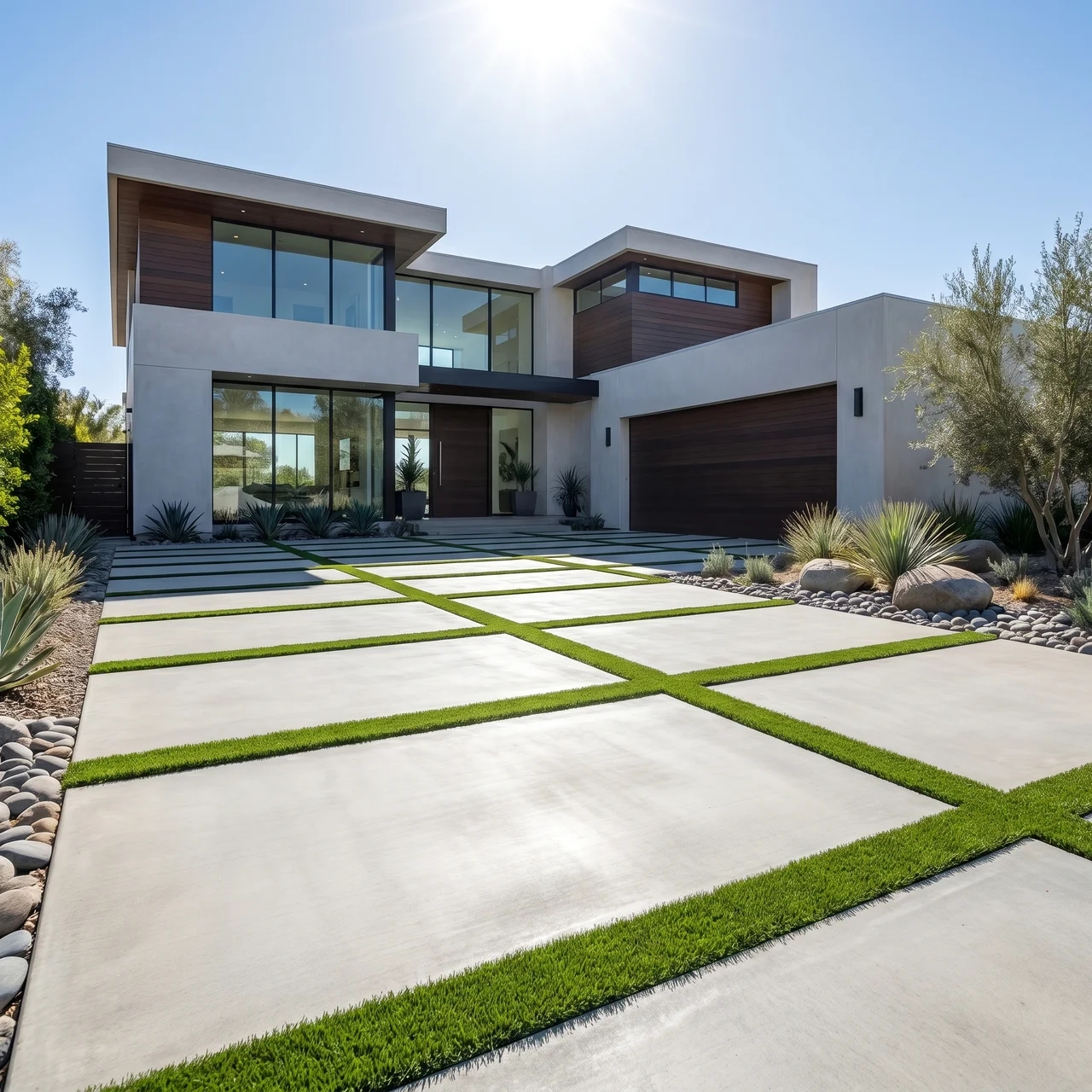
Square concrete with turf is the defining residential finish of the last five years of modern South Florida architecture — and for good reason. Individually formed concrete squares separated by strips of premium artificial turf transform a plain slab into a sculptural design feature, while genuinely improving drainage and softening the visual weight of a long driveway or wide patio. We've installed dozens of these and know exactly how to engineer joint spacing, edge details, and base prep so the pattern stays sharp and the turf stays vibrant for the long haul.
- Custom square or rectangular pad layouts
- Premium UV-stable artificial turf joints
- Smooth, broom, or sand-finished concrete
- Driveways, side yards, patios & walkways
- Drainage-optimized base under every joint
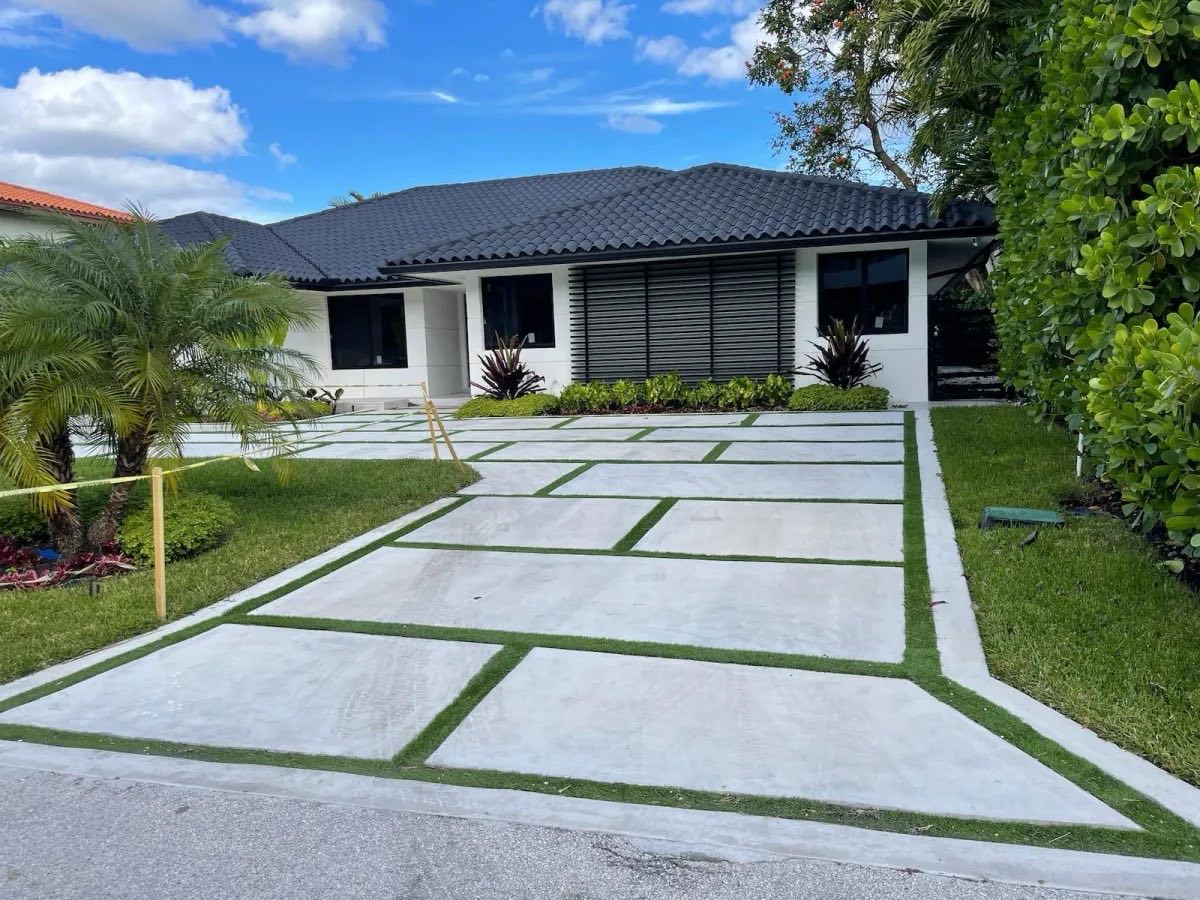
Why this look works so well
A 50-foot driveway poured as one continuous slab reads as one big gray rectangle. The same driveway broken into a grid of 4×4 or 5×5 foot pads with 4-inch turf joints reads as a designed surface — your eye moves across it instead of through it. The turf strips do real work too: they break up thermal expansion (so the pads don't fight each other in summer heat), they channel rainwater off the surface faster, and they soften the visual hardness of all that concrete. It's modern minimalism that's also smarter engineering.
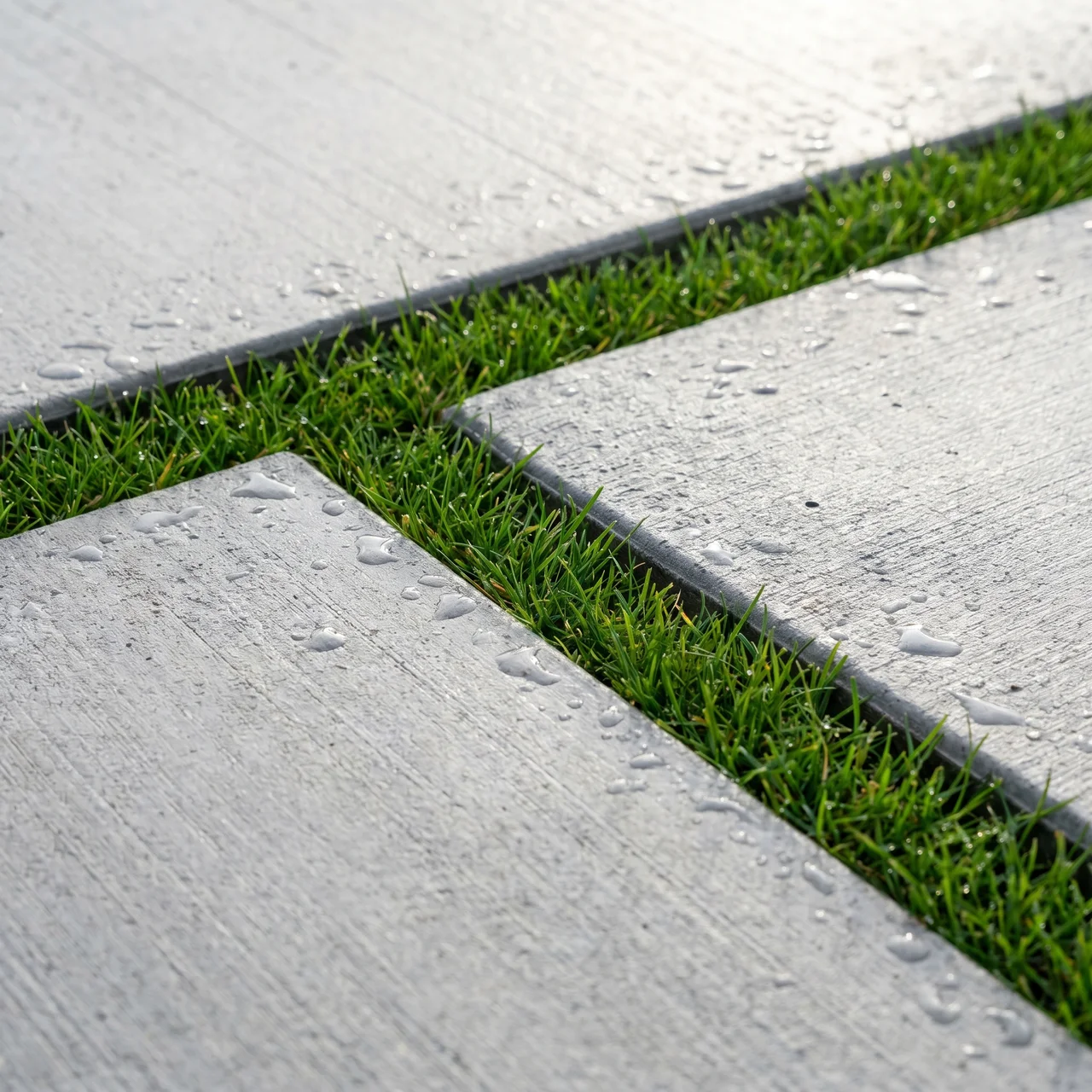
Pad sizes, joint widths and finish options
We size pads to your site — typically 3×3 to 6×6 feet, with the pad scale chosen to match the home's architectural lines. Joint widths run 3–6 inches; wider reads softer and more organic, narrower reads tighter and more contemporary. Concrete finish options include smooth steel-trowel (most modern), light broom (more grip on driveways), and salt-and-pepper exposed aggregate (more texture). We can also tint the concrete to a warm gray or charcoal to push the look even more contemporary.
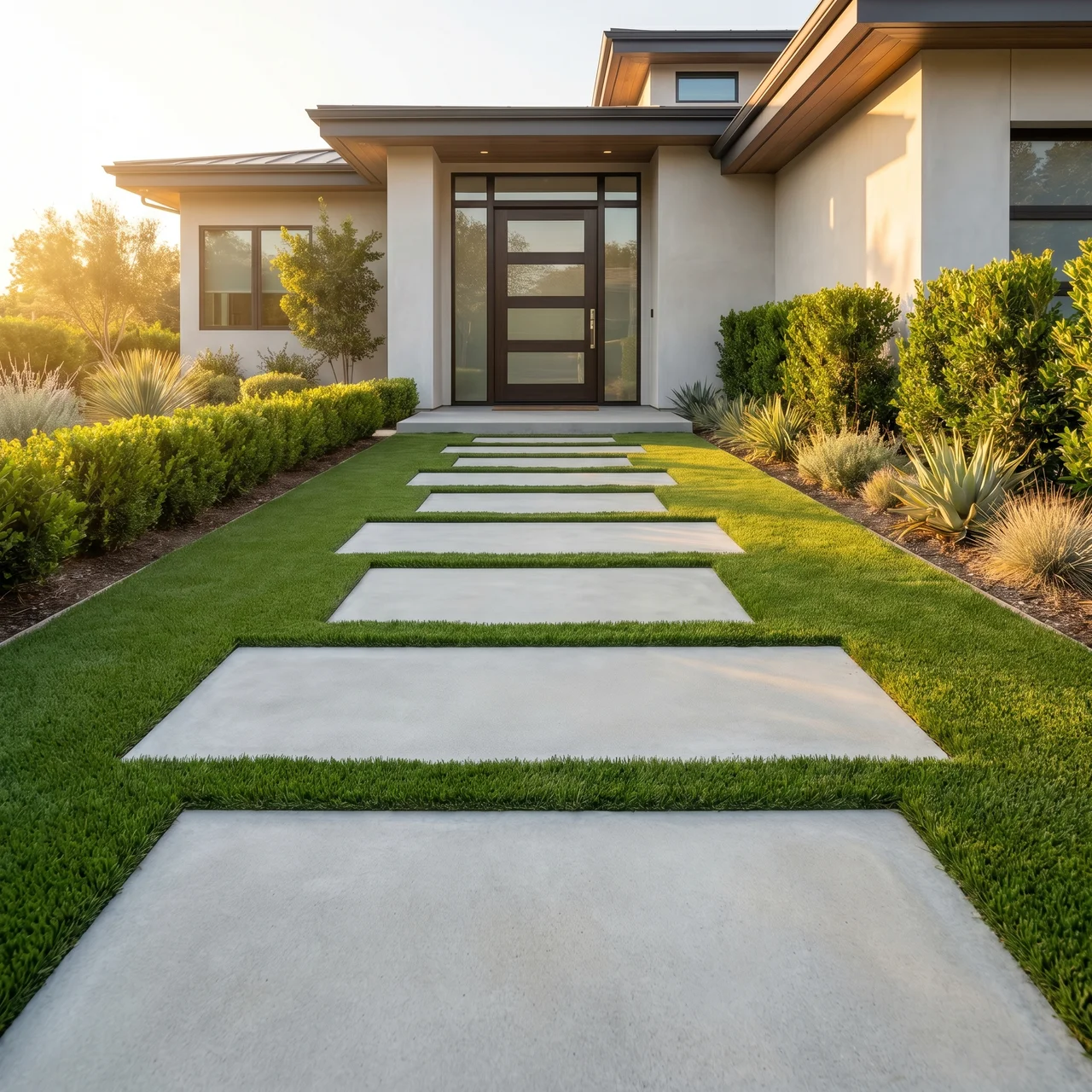
Premium artificial turf — not the cheap stuff
The turf joints are the make-or-break detail. Cheap turf fades to yellow in one Florida summer; we install premium UV-stable, polyethylene yarn turf with a realistic blade color and a mix of blade heights. Sub-base under the turf is compacted aggregate with a permeable weed barrier so water drains through instead of pooling. Edges are pinned and tucked tight against the concrete pads. Done right, the turf strips look like the day they were installed five years later.
From our portfolio.
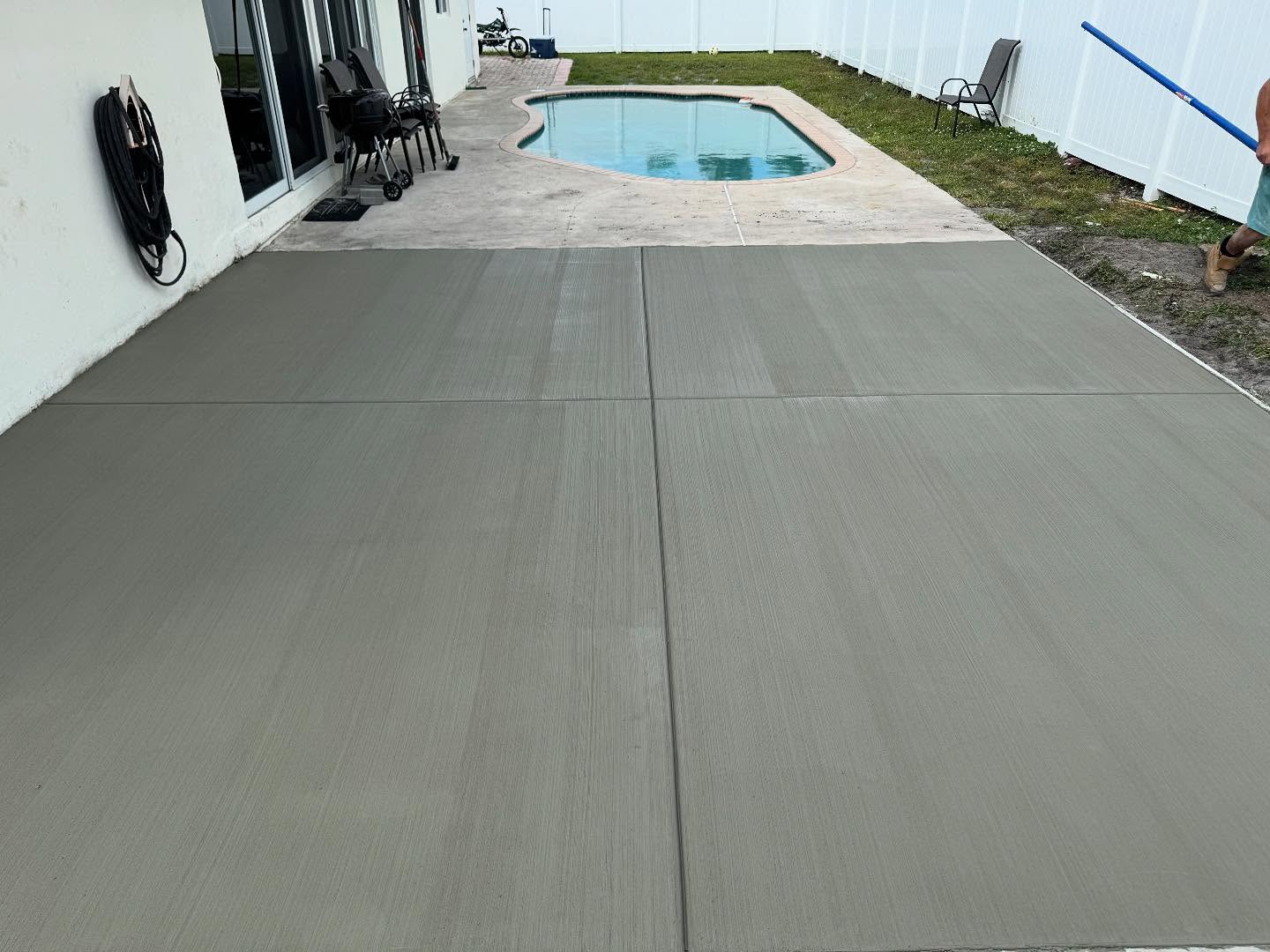
How we build it.
Layout & design
We chalk the grid on site so you can see and approve actual pad size, joint width, and orientation before any forms go down.
Form & pour each pad
Each pad is formed individually with crisp edges; we pour, finish and cure them so the geometry stays razor-sharp.
Base & turf install
Compacted permeable base goes into every joint, then UV-stable premium turf is cut, pinned and infilled flush with the concrete.
Questions, answered.
Does the turf get hot in the sun?+
Premium turf runs warmer than grass but cooler than dark concrete. For most South Florida installations the temperature is comfortable barefoot; for full-sun pool decks we recommend lighter turf colors and shorter blade heights.
Will weeds grow through the turf strips?+
Not with our base. We install commercial weed-barrier fabric over the compacted aggregate before the turf goes down. Combined with the turf backing, weed growth is essentially impossible.
How do I clean the turf joints?+
Hose them off occasionally. For leaves and debris, a leaf blower set on low works perfectly. The turf is engineered to drain through itself — there's no special maintenance.
Can I do this with real grass instead of artificial?+
Yes, and we install both. Real grass needs irrigation lines run through the joints and ongoing mowing — it looks lush but requires care. Artificial turf is the low-maintenance default; real grass is the organic upgrade.
Is it more expensive than a regular driveway?+
Modestly — typically 15–25% more than a continuous-pour driveway of the same square footage, because forming each pad individually takes more labor. Most clients consider it the highest-impact upgrade for the dollar.